Ingredients
- 250 g (2 cups) plain flour, plus extra for dusting
- ½ teaspoon salt, fine
- 3 large eggs
- Water, to taste (1-3 tablespoons)
- Optional: Salt for water
Execution
Mix the dry ingredients together: Add the flour and ½ teaspoon salt to a large bowl and whisk briefly to distribute the salt. Make a well in the middle of the flour for the eggs. Or if you like to mix the old-fashioned way, you can mix everything on a clean work surface.
Add the eggs and prepare the dough: Crack the eggs into the well and beat with a fork. Slowly fold in the flour from the sides until a rough, shaggy dough forms. If the mixture is crumbly and will not hold together when squeezed, add water 1 teaspoon at a time until the flour is incorporated.
Knead to smooth: Turn the dough out onto a lightly floured surface. Knead for 5–8 min, pressing, folding, and turning the dough until it is cohesive and fairly smooth. It should be firm, not damp or sticky. If the dough is dry and crumbly, add small amounts of water, or if it sticks too much, add a light dusting of flour.
Cover and let the dough rest: Form dough into a ball and wrap tightly in plastic wrap or place in an appropriate covered container. Let stand at room temperature 30 minutes. This rest lets the dough relax so that it can be rolled more easily without constantly shrinking back.
Roll out the dough into thin sheets: Cut the dough that has rested into two or four manageable parts. Cover the parts you are not using so they do not dry out. Roll out one portion on a lightly floured surface, turning as needed, until about 1/16 inch thick (about 1.5 mm). If the dough springs back, cover and let it rest a little longer before proceeding.
Slice the noodles: Lightly dust the sheet of dough with flour and cut into strips about 1/4 to 1/2 inch wide. If you want to serve them in soup, cut the ribbons to shorter lengths, about 3-6 inches. Separate the strips gently and dust them lightly with flour if they stick together.
Cook until tender: If you like, put a large pot of salted water to a rolling boil. Add noodles in batches, stirring gently to separate them. Test a noodle at the lower end of the range and cook for an additional 3–5 minutes. They are cooked through when tender with no raw, floury center. Longer strips may require extra time.
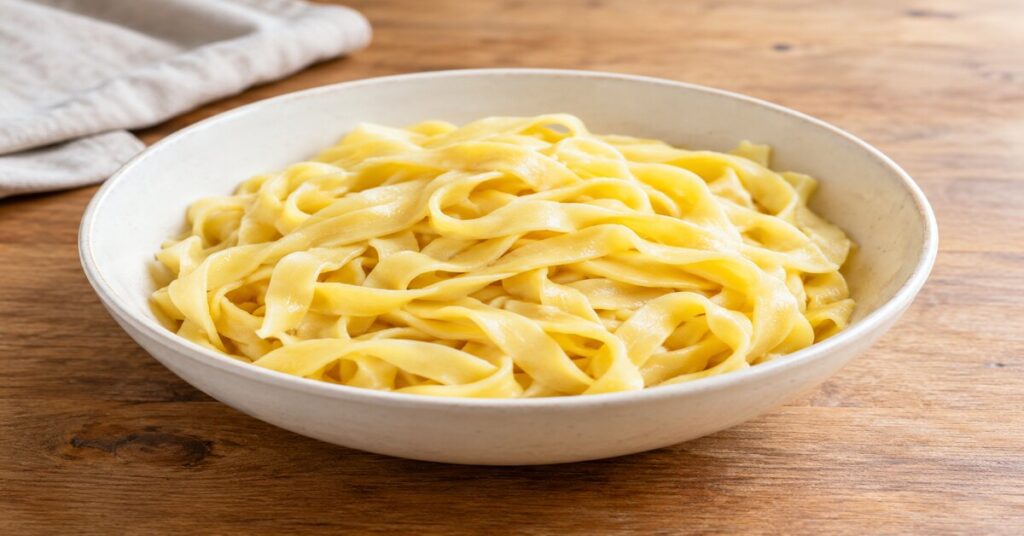
Drain and serve: When the noodles are cooked to your liking, drain immediately. Add butter and season with freshly ground black pepper or chopped herbs to taste, or drop directly into a pot of finished soup. Serve at once. Step 8: Drain and serve Once the noodles are cooked to your liking, drain them immediately. Toss with butter and sprinkle with freshly ground black pepper or chopped herbs if you like, or just dump them into a pot of finished soup. Serve warm.
Additional tips
- Adjust moisture slowly. Egg sizes and different flour brands can affect the dough. Add water, teaspoonful at a time, to keep the dough from becoming sticky.
- Cover unused dough. Rolling out can crack the edges if the surface has been exposed to air and dried out.
- Use minimum flour. If the flour is too loose, it will cloud the cooking water and make the noodles taste floured.
- First cook a test noodle. The thickness and width of your noodles will determine how quickly they cook. Test one and cook the full batch for the full time.
- Don’t let raw egg noodles sit at room temperature drying for hours. Store freshly made noodles for later use in the refrigerator or freezer, using the storage guidance below. If you make noodles at home using raw flour and eggs, make sure you cook them thoroughly.
Nutrition Facts
Homemade Egg Noodle Recipes
Serving Size: 1/4 of the RecipeDisclaimer: Nutrition information is an estimate per serving, calculated from the listed ingredients and a yield of 4 servings. Actual values may vary by ingredient brand, egg size, and portion size. Additional cooking salt, butter, and sauces are not included.
Easy Homemade Egg Noodle Recipes (From Scratch)
Homemade egg noodles are a simple way to make a comforting pasta dish with a few everyday ingredients. This homemade egg noodle recipes is made with all-purpose flour, eggs, salt, and a little water as needed to make a firm dough that rolls thin and cuts into tender noodles. You don’t need a past machine or any special equipment, just a mixing bowl, rolling pin, and sharp knife.
Knowing what the dough should feel like and how thin to roll it makes making fresh noodles much easier. Boil until tender, add to homemade chicken soup, or serve with butter and herbs. This recipe will guide you through the steps of mixing, kneading, resting, rolling, cutting, cooking, and storing your homemade egg noodle recipes safely.
Why You’ll Love This Recipe
-
- Basic pantry ingredients: Flour, eggs, and salt are the foundation, with some water at hand to thin the dough if needed.
-
- No special equipment: If you don’t have a pasta machine, a rolling pin and sharp knife will do.
-
- Shape and size are flexible: Cut the dough into thin strips for soup or wider ribbons for a buttered noodle side dish.
-
- Fresh and tender texture: It takes just a couple of minutes to cook fresh-cut noodles, depending on their thickness.
-
- Easy to make ahead: Fresh noodles can be stored in the fridge for a short time or frozen in portions for a useful future meal.
Ingredients Notes on egg noodle recipes
All-purpose flour: The structure of the noodles comes from this. Make sure to measure the flour carefully; too much and the dough will be hard to knead and roll. When it is available, 250 grams is a good weight to have.
Eggs: Three large eggs bring moisture, richness, color, and structure. Egg sizes and flour absorption vary, so dough may need a little more water.
Salt: A little adds flavor to the dough. You can also salt the boiling water to season the noodles while they cook.
Water: Only add water slowly if the dough is still dry and will not come together when squeezed. Start with a tablespoon; don’t dump it all in at once.
Extra flour for dusting: A light dusting will prevent the rolled sheets and freshly cut noodles from sticking to the counter, knife, or each other. Use just enough to keep the noodles from sticking, but don’t coat them well.
Substituting for Ingredients
Whole wheat flour: You can substitute some of the all-purpose flour for whole wheat flour. The result will be more voluminous and may require additional water. Try changing about ¼ cup first, instead of the whole quantity of flour.
Use water instead of more egg: A little water can help pull a dry dough together. It does not replace the richness or structure of an egg, so use it sparingly.
Noodle width variations: Cut the pasta into thin strips for soup, medium ribbons for everyday meals, or wider noodles for a hearty side dish. Thicker noodles will take longer to cook.
Serving Suggestions
These homemade egg noodle recipes are great in many dishes:
-
- Chicken noodle soup: Add the fresh noodles near the end of cooking and cook until they are tender.
-
- Butter and herbs: Toss the cooked noodles with butter, black pepper, and chopped parsley.
-
- Beef or mushroom gravy: Or serve wider ribbons in a savory gravy or with braised beef.
-
- Creamy chicken dishes: Toss cooked noodles with a creamy chicken sauce before serving.
-
- Easy vegetable sides: Serve with sautéed mushrooms, peas, carrots, or green beans.
Storage and Reheating
How to Store Fresh Uncooked Egg Noodle Recipes
The safest, simplest, and best way is to cook the noodles right after cutting them. If you want to make them ahead of time, lightly dust the strands with flour, form them into loose nests, and refrigerate in a covered container. The conservative storage window is a max of 2 days. Raw egg noodles should not sit out at room temperature for hours or overnight.
Can you freeze egg noodles that you made at home?
Yes. Arrange the floured noodles loosely in heaps and freeze in a suitable freezer container. If using frozen noodles for this recipe, use within about 2 weeks for best quality. Cook from frozen in boiling water. Allow extra time and check for tenderness before draining.
How to Store Egg Noodle Recipe Cooked
Refrigerate leftover cooked noodles in a covered container. Refrigerate at 40°F (4°C) or below and use leftovers within 3–4 days. If the noodles have dried out, add a little water or broth. Reheat thoroughly to 165°F (74°C). Discard any perishable food left at room temperature for more than 2 hours, or 1 hour if the temperature is above 90 degrees Fahrenheit (32 degrees Celsius).
Mistakes to Avoid in Egg Noodle Recipes
The dough is too dry. This is a normal, firm dough, but it should eventually hold together. Add water a teaspoon at a time until the loose flour is worked in.
The dough keeps coming back. Gluten gives pasta dough its elasticity. Don’t keep stretching it; cover it and let it rest longer.
The noodles stick. Dust cut strands lightly with flour and separate gently before boiling. Try not to drop a big clump of tangles into the pot.
The noodles get mushy. These thin noodles cook fast. Check after about 3 minutes and drain as soon as they are tender.
Try the dough raw before you bake it. Do not eat the raw egg-noodle dough. Raw eggs and uncooked flour both can carry harmful germs. Handle the dough carefully and cook the noodles well.
Common Questions on Egg Noodle Recipes
Is a pasta machine necessary for homemade egg noodles?
No. All you need is a rolling pin and a good knife. Roll out dough as evenly and thinly as possible and cut into strips. Rolling is easier with a pasta machine, but you don’t need one.
How long to cook homemade egg noodles?
Thin, freshly cut noodles will boil in about 3 to 5 minutes. Actual time will vary according to thickness and width, so test a piece and cook until the center is tender.
Do I have to make homemade egg noodles in advance?
Yes. Make the noodles, cut them into pieces, and keep them in a covered container in the refrigerator for up to 2 days or freeze for longer convenience within the quality window recommended in the recipe. Never leave egg noodles raw, drying at room temperature for hours.
Why is my egg noodle dough firm?
The dough can be too dry, not rested long enough, or not relaxed and hard to roll. If it is crumbly, add a little water, knead until cohesive, and let it rest covered for the full 30 minutes. If it springs back while rolling, let it rest longer.
Can I put homemade egg noodles directly into chicken soup?
Yes. Add the uncooked noodles at the end of the soup’s cooking time and cook until they are fully tender. Let the noodles soak up some of the broth and thicken the soup slightly, adding a little more broth if necessary.
Final Thought on Egg Noodle Recipes
This homemade egg noodles recipe uses simple ingredients and a simple rolling and cutting technique to make fresh pasta at home. The noodles take only a few minutes to cook once rested and thinly rolled. Serve them with butter, add them to chicken soup, or serve them with your favorite sauce. Keep dough covered as you work, cook noodles through, and refrigerate or freeze any uncooked portions you are not using immediately.