Beef Cheeks Recipe
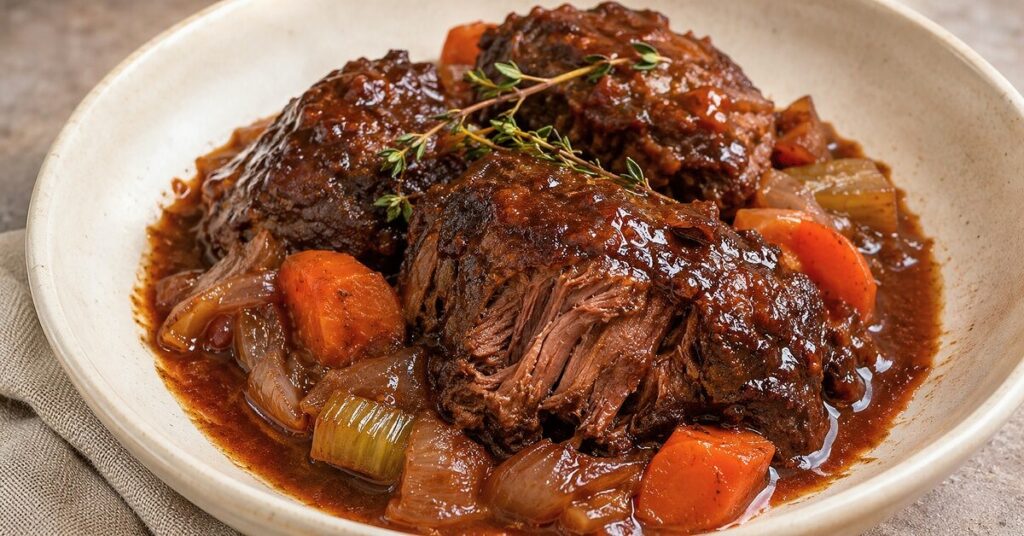
This beef cheeks recipe transforms a tough cut of beef into an incredibly tender, flavorful dinner with a rich red wine sauce. The beef is slowly braised in a Dutch oven with garlic, onions, carrots, celery, and fresh herbs until it becomes fork-tender. Serve these red wine-braised beef cheeks with mashed potatoes, creamy polenta, or your favorite side dish for a comforting homemade meal.
Why You’ll Love This Recipe
- Incredibly tender: Slow braising makes the beef cheeks soft and easy to pull apart.
- Rich flavor: Red wine, garlic, tomato paste, and fresh herbs create a deeply savory sauce.
- One-pot cooking: The beef and sauce are prepared in the same Dutch oven.
- Great for special occasions: A comforting main course for family dinners and holiday meals.
What is the beef cheeks recipe
Beef cheeks are cuts of meat taken from the cheek muscles of cattle. They contain connective tissue that benefits from slow, moist cooking.
This recipe prepares them through red wine braising, combining beef broth, aromatic vegetables, and herbs to produce tender meat and a concentrated savory sauce.
Ingredients
- 3 lb (1.36 kg) Beef cheeks, trimmed
- 1 teaspoon Diamond Crystal kosher salt
- ½ teaspoon ground black pepper
- 2 tablespoons olive oil
- 1 medium Yellow onion, chopped
- 2 medium Carrots, peeled and chopped
- 2 Celery stalks, chopped
- 4 garlic cloves, minced
- 2 tablespoons Tomato paste
- 2 cups (480 ml) Dry red wine, such as Cabernet Sauvignon or Merlot
- 2 cups (480 ml) Low-sodium beef broth
- 4 sprigs Fresh thyme
- 2 sprigs Fresh rosemary
- 2 Bay leaves
How to Make
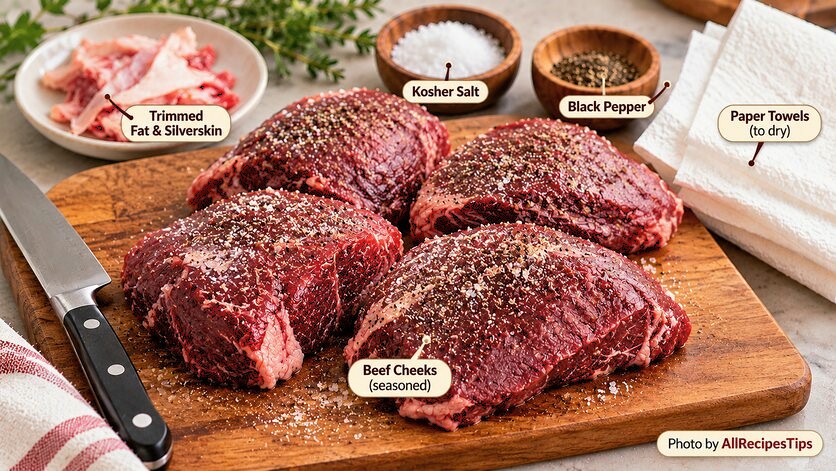
Prepare the Beef Cheeks: Trim away any thick, tough silverskin and excess surface fat from the beef cheeks. Pat the meat thoroughly dry with paper towels.
Season both sides with kosher salt and black pepper. Allow the seasoned meat to sit while preparing the vegetables.
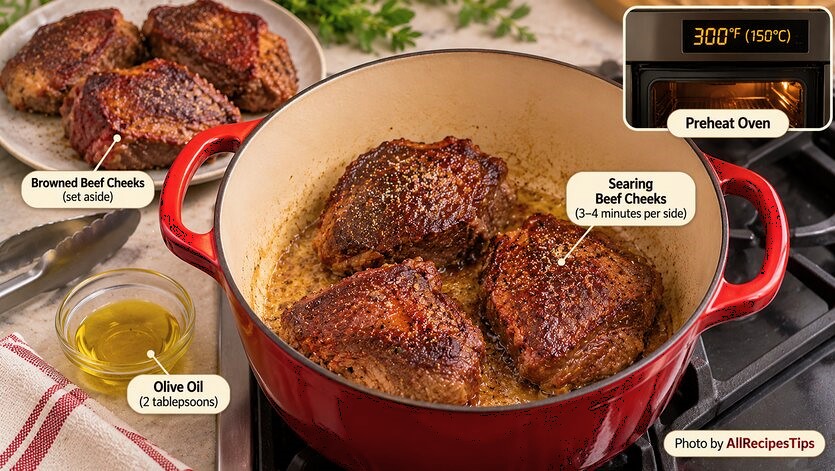
Preheat the Oven and Brown the Beef: Preheat your oven to 300°F (150°C).
Heat 2 tablespoons olive oil in a large 5- to 6-quart Dutch oven over medium-high heat.
Working in batches, add the beef cheeks without overcrowding the pot. Sear each side for approximately 3–4 minutes until deeply browned.
Transfer the browned beef to a plate. Browning in batches helps develop a richer flavor and prevents the meat from steaming.
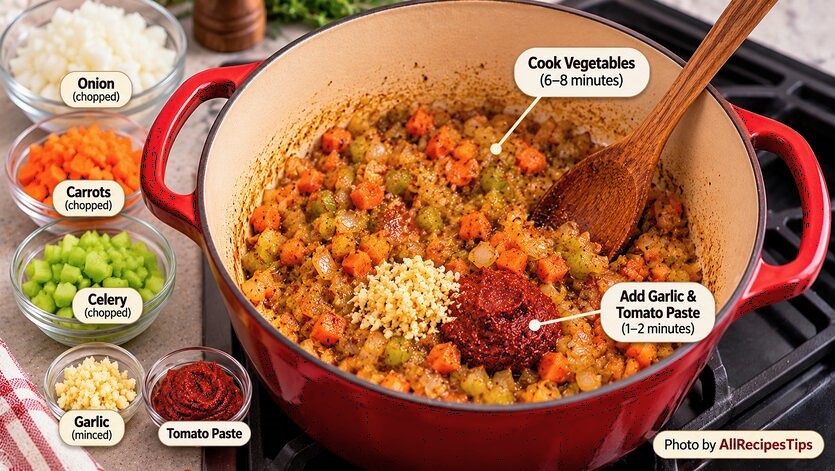
Cook the Aromatic Vegetables: Reduce the heat to medium. Add the chopped onion, carrots, and celery to the same Dutch oven.
Cook for approximately 6–8 minutes, stirring occasionally, until the vegetables begin to soften and develop some golden color.
Add the minced garlic and tomato paste. Stir continuously for another 1–2 minutes until the garlic smells fragrant and the tomato paste darkens slightly.
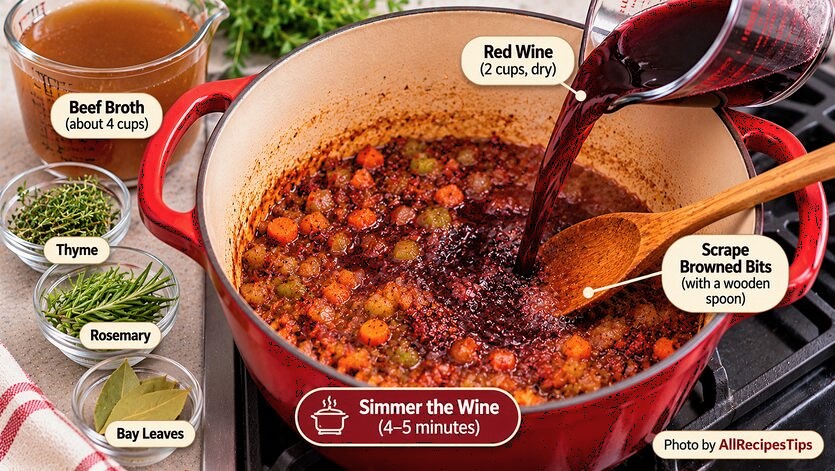
Deglaze with Red Wine: Pour the 2 cups of dry red wine into the Dutch oven.
Use a wooden spoon to scrape the browned bits from the bottom of the pot. These browned bits add important flavor to the sauce.
Allow the wine to simmer gently for approximately 4–5 minutes.
Add the beef broth, thyme, rosemary, and bay leaves. Stir to combine.
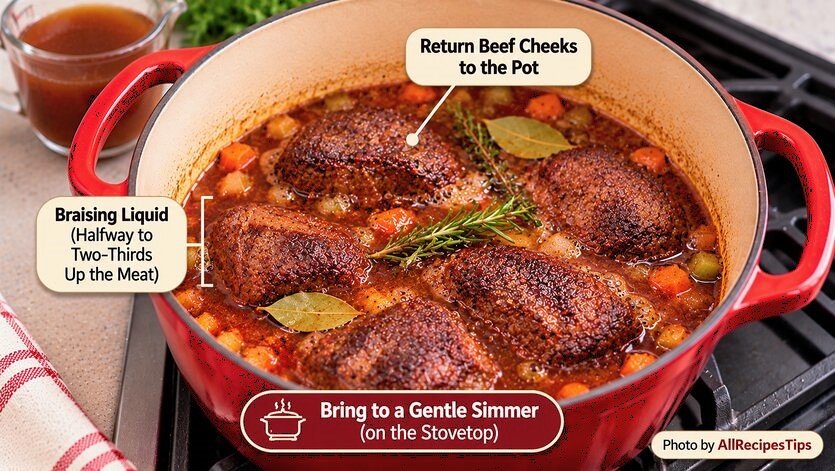
Return the Beef to the Dutch Oven: Return the browned beef cheeks to the pot, arranging them between the vegetables.
The braising liquid should come approximately halfway to two-thirds of the way up the meat. The cheeks do not need to be completely submerged.
Bring the liquid to a gentle simmer on the stovetop.
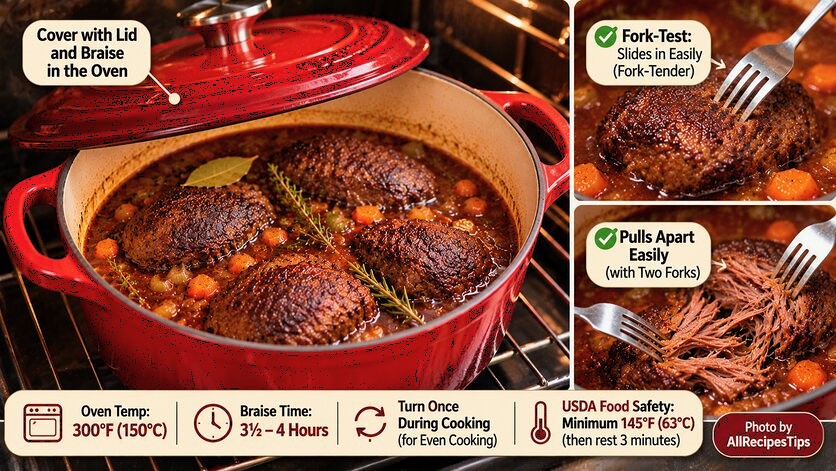
Slowly Braise Until Fork-Tender: Cover the Dutch oven with its lid and transfer it to the preheated 300°F oven.
Braise for approximately 3½–4 hours. Check the meat after about 3 hours, then continue cooking as necessary.
Turn the cheeks once during cooking to help them cook evenly.
The beef is ready when a fork or thin skewer slides into the thickest part with very little resistance. The meat should feel soft and should pull apart easily with two forks.
For food safety, the USDA recommends a minimum internal temperature of 145°F for whole beef cuts, followed by a three-minute rest. This recipe’s extended braising continues until the meat becomes tender. See the USDA safe minimum internal temperature guidance.
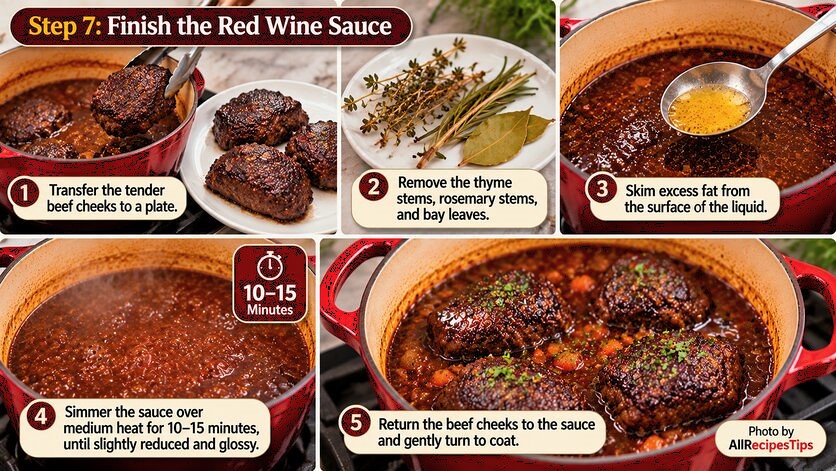
Finish the Red Wine Sauce: Carefully remove the Dutch oven from the oven.
Transfer the tender beef cheeks to a plate and remove the thyme stems, rosemary stems, and bay leaves.
Skim excess fat from the surface of the cooking liquid.
Place the Dutch oven over medium heat and simmer the sauce uncovered for approximately 10–15 minutes, or until slightly reduced and glossy.
Return the beef cheeks to the sauce and gently turn them to coat.
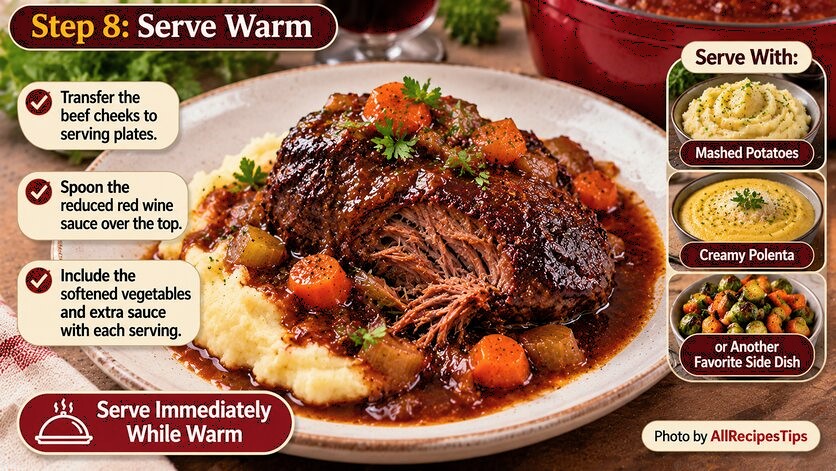
Serve Warm: Transfer the beef cheeks to serving plates and spoon the reduced red wine sauce over the top.
Include some of the softened vegetables and extra sauce with each serving.
Serve immediately with mashed potatoes, creamy polenta, or another favorite side dish.
Additional tips
- Choose properly trimmed cheeks: Ask your butcher to remove the thick silverskin if you are unfamiliar with trimming this cut.
- Use dry red wine: Cabernet Sauvignon and Merlot work well. Avoid sweet dessert wines, which can make the sauce overly sweet.
- Make it ahead: This recipe can be prepared a day in advance. Chilling also makes it easier to remove solidified surface fat.
- Be patient: Beef cheeks can remain firm even after several hours. Continue braising until they are genuinely fork-tender.
- Adjust the seasoning: Taste the finished sauce before serving because beef broth brands have different sodium levels.
How to Serve
- Creamy mashed potatoes: A classic option for soaking up the rich sauce.
- Creamy polenta: Its smooth texture complements the tender beef.
- Buttered egg noodles: A simple accompaniment that works well with the braising sauce.
- Steamed green beans: Add a fresh vegetable side to balance the rich main course.
Storage and Reheating
Refrigerator: Allow the beef cheeks to cool slightly, then transfer them and the sauce into airtight, shallow containers. Refrigerate within two hours. Keep refrigerated at 40°F (4°C) or below and use within 3–4 days.
Freezer: Freeze cooled beef cheeks with enough sauce to cover them in freezer-safe airtight containers. For best quality, use within approximately 2–3 months.
Thawing: Thaw frozen leftovers in the refrigerator before reheating.
Reheating: Place the beef and sauce in a covered saucepan over low heat. Stir occasionally and heat until the leftovers reach an internal temperature of 165°F (74°C).
According to the USDA leftovers safety guidelines, cooked food should be refrigerated promptly, and leftover food is generally used within 3–4 days. The USDA reheating guidance recommends reheating leftovers to 165°F.
FAQs for the beef cheeks recipe
Are beef cheeks tough?
Raw beef cheeks are naturally tough because they contain substantial connective tissue. Slow cooking with moist heat helps soften the meat and produces a tender texture.
How long does it take to cook beef cheeks?
At 300°F (150°C), beef cheeks typically need approximately 3½–4 hours in this recipe. Actual cooking time depends on their size, thickness, and the consistency of the oven temperature.
Can I make beef cheeks without red wine?
Yes. Replace the red wine with additional beef broth and add approximately 1 tablespoon of red wine vinegar for some acidity. The resulting sauce will have a different flavor from the original recipe.
Can I prepare beef cheeks ahead of time?
Yes. Prepare the complete recipe a day ahead and refrigerate it. The next day, remove the solidified fat from the sauce and reheat the beef and sauce thoroughly.
How do I know when beef cheeks are ready?
Insert a fork or skewer into the thickest part. It should slide in easily, and the meat should pull apart with little resistance. Do not rely on cooking time alone.
What is the best side dish for beef cheeks?
Mashed potatoes and creamy polenta are excellent choices. Both complement the soft beef and provide something to absorb the rich red wine sauce.
Health Benefits for Beef Cheeks Recipe
Beef cheeks provide protein, iron, zinc, and vitamin B12, which are important nutrients for normal body functions. This dish also contains vegetables that contribute fiber and additional micronutrients. However, the overall nutritional profile depends on the beef, cooking fat, broth, and portion size.
Nutrition Facts
Serving Size: 1/6 of the recipe (1 serving)
Servings: 6
| Nutrient | Amount Per Serving |
|---|---|
| Calories | 395 kcal |
| Total Fat | 16 g |
| Saturated Fat | 5 g |
| Cholesterol | Not reliably calculated |
| Sodium | 300 mg |
| Total Carbohydrates | 8 g |
| Dietary Fiber | 1 g |
| Total Sugars | 3 g |
| Added Sugars | 0 g |
| Protein | 52 g |
Nutrition disclaimer: These values are estimates based on the stated ingredients and serving size. Actual values may vary depending on beef trimming, the amount of sauce consumed, wine reduction, broth brand, and preparation methods. Cholesterol is not reported because a sufficiently reliable matching beef-cheek reference was not established.
Final Thoughts
This beef cheeks recipe is a wonderful way to turn an inexpensive, hardworking cut of beef into a deeply flavorful meal. Slow braising with red wine, aromatic vegetables, and herbs produces tender meat and a rich sauce that pairs beautifully with comforting side dishes.