Ingredients
- 1 cup (226 g) unsalted butter, softened but not melted
- 1 cup (120 g) sifted confectioners’ sugar (sift if lumpy)
- 1 large egg yolk, at room temperature, if possible
- 1 ½ tsps vanilla extract
- 2½ cups (300 g) all-purpose flour, weighed if possible
- ½ t fine salt
- up to 1 tablespoon milk, optional if dough is too crumbly to hold together
Execution
Mix the dry ingredients: In a medium bowl, whisk together the all-purpose flour and salt. Set the bowl aside while you make the butter mixture.
Cream the butter and sugar: In a large bowl, beat together the softened butter and confectioners sugar. With an electric mixer, beat on medium-low to medium speed for about 1½–2 minutes, or until smooth and creamy. Scrape down the bowl as necessary. The mixture doesn’t have to be super fluffy.
Add the egg yolk and vanilla: Beat in the egg yolk and vanilla extract until incorporated. Scrape down the sides and bottom of the bowl so there are no streaks of butter.
Add the flour: Add the flour mixture in two additions, mixing on low speed just until the dough starts to form clumps. Press a small piece between fingers to see if it holds together. If the dough is still falling apart, add milk. 1 tsp at a time, using no more than 1 tbsp. Don’t overmix, or the cookies will be tougher.
Chill the dough: Divide the dough in half and form each half into a flat disc. Wrap the discs and chill for at least 1 hour. Chilling the dough will firm up the butter and make it easier to roll and cut cleanly.
Preheat the oven and prepare the baking sheets: Just before chilling time is over, preheat the oven to 350°F (177°C). Line baking sheets with parchment. Keep the unused dough in the fridge while you work with the first batch.
Roll and cut the cookies: Roll one disc out on a lightly floured surface or between sheets of parchment paper to about ¼ inch thickness. Using a small cookie cutter, about 2 inches wide, cut out the dough. Place the cookies on the prepared baking sheet, leaving about 1 inch between each cookie. Collect the scraps and re-roll them once. Repeat with the rest of the dough.
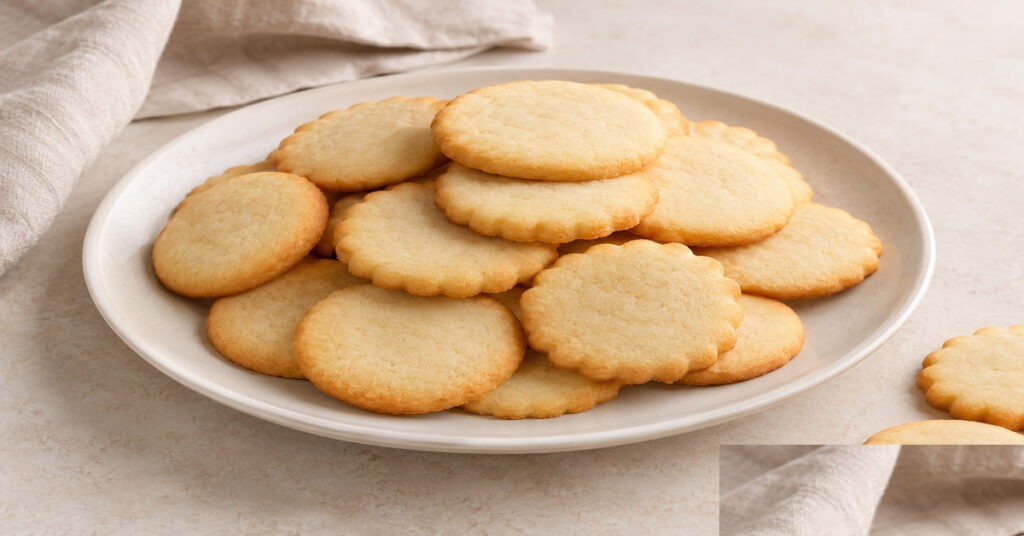
Bake and cool: Bake one sheet at a time on the center rack for 10–12 minutes, watching the first batch. The cookies should be set looking with just a touch of golden color around the edges. The centers should be fairly pale. Let the cookies cool on the baking sheet for 5 minutes, then transfer to a wire rack to cool completely. They will harden as they cool down.
Additional tips
- Measure the flour carefully: Too much flour can make the dough dry and crumbly. The most reliable way to measure is with a kitchen scale.
- Keep the dough cool: If the cutouts become soft or hard to transfer, chill the dough or tray for 10-15 minutes before baking.
- Use softened (not melted) butter. Greasy or melted butter alters the dough consistency and can make shaping less predictable.
- Roll out evenly. Keep dough about 1/4 inch thick so cookies bake at a similar rate.
- Don’t just watch the timer; watch the edges. Butter cookies can brown too quickly. Remove when edges are just lightly golden and centers look set.
Nutrition Facts on Butter Cookie Recipe
Easy Butter Cookie Recipe · Estimated per serving
Serving Size: 1 Cookie
110 Calories
Based on a batch of 30 cookies
| Total Fat | 6 g |
|---|---|
| Saturated Fat | 4 g |
| Cholesterol | 22 mg |
| Sodium | 40 mg |
| Total Carbohydrate | 12 g |
| Dietary Fiber | <1 g |
| Total Sugars | 4 g |
| Includes Added Sugars | 4 g |
| Protein | 1 g |
Nutrition information is an estimate calculated from the listed ingredients. Actual values may vary depending on ingredient brands, measurements, and serving size.
Butter Cookies Recipe (Easy, Tender, Crisp, and Buttery)
Homemade butter cookies are an easy way to turn everyday baking ingredients into a delicate buttery treat. This simple butter cookie recipe yields cookies with a rich vanilla taste, delicately golden edges, and a tender texture that becomes deliciously crisp as the cookies cool. These cookies are great for an afternoon tea, coffee breaks, holiday cookie trays, or an everyday dessert. The dough is rolled out and cut into shapes.
The key to a consistent batch of cookies is the right amount of flour, keeping the dough cool, and taking the cookies out of the oven before the edges get too dark. Easy to make with simple directions and a little chill time, these homemade butter cookies are perfect for making ahead and enjoying whenever a sweet craving hits.
Why You Will Love This Food
-
- Rich, buttery flavor: The main flavor is unsalted butter, along with vanilla, to give a warm, familiar scent.
-
- Simple ingredient list: A mere handful of common baking ingredients.
-
- Easy to shape: Roll chilled dough and use round, fluted, or other small cookie cutters to make different shapes.
-
- Make-ahead friendly: Chill dough before baking or freeze portions for baking later.
-
- Good for many occasions: Enjoy these cookies with coffee, tea, fruit, or a simple chocolate dip.
Ingredients notes on the butter cookie recipe
Unsalted butter: Butter is the base of this recipe, giving flavor, richness, and tenderness. Let it soften until you can easily press it with a finger, but not greasy or melted.
Confectioners’ sugar: Also known as powdered sugar, it dissolves easily into the butter and helps give the cookies a delicate texture. If lumps appear, sift it.
Egg yolk: The yolk acts as a binder for the dough and adds richness without adding as much extra moisture as a whole egg.
Vanilla extract: The vanilla is complementary to the butter without competing with the simple flavor. You may also use pure vanilla extract or good-quality vanilla extract.
All-purpose flour: Flour provides structure to the cookies. If you can, weigh it. If you use measuring cups, spoon the flour into the cup and level the top instead of scooping it out of the bag.
Fine salt: A pinch goes a long way in balancing the sweetness and adding to the buttery quality.
Milk if needed: A teaspoon or two will help bring together an unusually dry dough. Add it slowly, not all in one go.
Substitute the butter cookie recipe.
Salted butter: You can use salted butter instead of unsalted butter. Reduce the added salt to about ¼ teaspoon and then adjust to your own taste.
Almond extract: Substitute vanilla with ¼ teaspoon almond extract for a different flavor. Almond extract is concentrated, so use a little to start.
Granulated sugar: Granulated sugar is not a direct substitute for confectioners’ sugar in this recipe and is not texture-neutral. It may lend a slightly different texture and change the behavior of the dough. Use confectioners’ sugar for the desired delicate result.
Gluten-free flour: A gluten-free baking blend may work, but the final texture and handling will vary by brand. Pick a mix that’s for cookies or general baking, and follow any specific instructions that come with it.
How to Serve
These butter cookies are delicious plain, letting their buttery vanilla flavor shine. Serve with fresh strawberries or raspberries for an easy dessert plate.
They also pair well with hot coffee, black tea, chai, or a glass of milk. If you want them a little fancier, once they are completely cool, dip one edge of each cookie into melted chocolate and let set before serving.
Use small cookie cutters during the holidays, and arrange the cooled cookies on a mixed cookie platter. Don’t add decorations until the cookies are completely cool.
Storage and Heating
At room temperature: Store fully cooled cookies in an airtight container and store in a cool, dry place for about 5-7 days for best quality. Don’t seal them while still warm, or the trapped moisture will make the texture soft.
Freezer: For best quality, freeze baked cookies in a freezer-safe container with parchment between layers for up to 2 months. Keep covered and defrost at room temperature.
Chill the dough: Wrap the dough tightly and refrigerate it at 40°F (4°C) or colder. USDA FoodKeeper says that homemade cookie dough that contains raw egg and flour should be kept in the refrigerator for 2 to 4 days. Bake right away or freeze if you need to store it longer.
Freezing the dough: Wrap the dough discs tightly and freeze for up to 2 months for best quality. Refrigerate overnight. When ready to use, let dough soften just enough to roll.
Reheating: No need to reheat. For a slightly warm cookie, warm briefly in a low oven, watching carefully so it does not brown too much.
Food safety: Do not eat raw dough. Harmful germs can be present in uncooked flour and raw eggs. Bake cookies according to directions and wash hands, utensils, and surfaces after handling raw dough.
Mistakes to Avoid in a Butter Cookie Recipe
Adding too much flour: Too much flour is a common reason for butter cookie dough to dry out and become difficult to roll. Measure the flour by weight or use the spoon-and-level method.
Skipping the Chill: Working with soft dough is difficult, and it is more prone to losing its shape. Chill as directed, at least 1 hour.
Overworking the dough: Adding flour and mixing too long develops more gluten and makes the cookies tougher. Stop when dough just comes together.
Overbaking the cookies: These cookies should not be dark brown. The edges should be a light golden color, the centers still pale and set.
Moving the cookies too soon: Fresh baked cookies are fragile. Let them sit on the baking sheet for 5 minutes before moving to a rack.
FAQs on the butter cookie recipe
My butter cookie dough is crumbly. Why is it?
The flour may have been over-measured, or the dough may need a bit more moisture. First, take a pinch of it between your fingers. If it will not hold, add milk 1 teaspoon at a time to the 1 tablespoon listed. If the dough is already holding together, do not add any more liquid.
Can I make the butter cookie dough ahead of time?
“Yeah. Wrap the dough discs tightly and refrigerate for 2–4 days, per USDA FoodKeeper guidelines for homemade cookie dough. For best results, you can also freeze the dough for up to 2 months. Thaw frozen dough in the fridge before rolling.
How do you know when butter cookies are ready?
Look for light golden edges and set centers. The tops of the cookies should remain quite pale. Don’t wait until they are deep golden brown; they will continue to firm up as they cool.
Can I use salted butter instead of unsalted?
Yes. Cut the added salt down from ½ teaspoon to about ¼ teaspoon. The real saltiness will depend on the brand of butter you use.
Can I use this dough in a cookie cutter?
This is a recipe for rolled and cut-out cookies, so the dough consistency may not be right for all cookie presses. The cookie press recipe is designed to be piped through the press and may require a different dough consistency. This recipe is for cutouts. Don’t assume it will work unchanged in a press.
Final Thought
These are homemade butter cookie recipe with a simple combination of buttery richness, vanilla flavor, and slightly crisp edges. Measure your flour, chill your dough, and watch for pale-golden edges, and you can make a batch for everyday treats, afternoon tea, or a holiday cookie tray. When shaping, keep the dough cold, don’t overbake, and let the cookies cool before putting them into an airtight container.