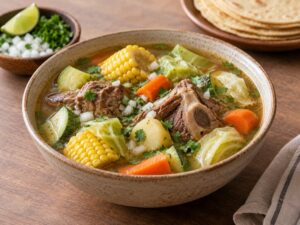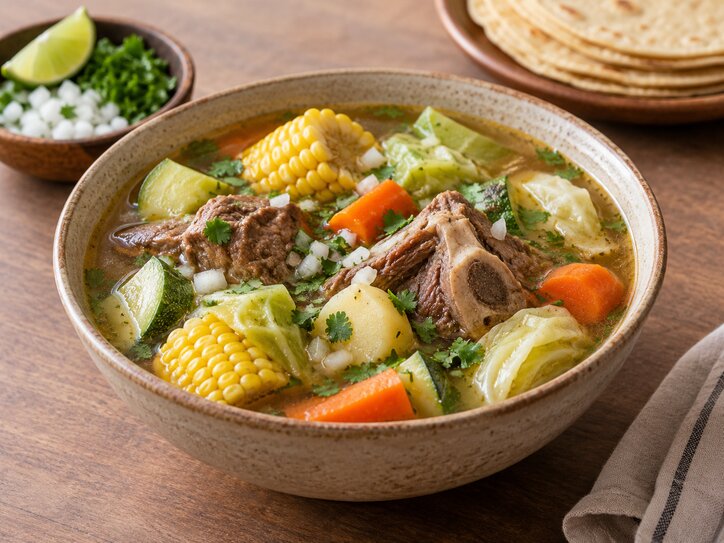
Caldo de res is a comforting Mexican beef soup with tender beef, hearty chunks of vegetables and a savoury homemade broth. The bone in the beef shank gives the soup a rich, meaty flavour, and corn, carrots, potatoes, chayote, zucchini and cabbage make each serving a filling meal. Before serving, lift the broth with a squeeze of lime, some chopped onion, and fresh cilantro.
This caldo de res recipe is made on the hob with a simple method, adding the vegetables in stages so they don’t get too soft. You can also switch out the vegetable selection to be whatever is available at your grocery store. Serve hot with warm corn tortillas or Mexican rice for a hearty lunch or dinner.
Why This Recipe Is Good
Savoury thick broth: Bone-in beef shank simmers slowly with onion, garlic and herbs to develop flavour.
- A hearty one-pot meal: This is a hearty soup with beef, corn, potatoes and fresh vegetables to be a main dish.
- Flexible vegetables: Chayote is traditional, but feel free to substitute whatever vegetables you like or have on hand.
- Hands off, easy hob cooking: The beef slowly becomes tender while you’re doing other things.
Fresh, customisable toppings: Everyone can customise their bowl with lime juice, cilantro, onion and jalapeños.
Notes on Ingredients
Beef shins: The bone-in beef shank is a good choice as the connective tissue and bone adds body and flavour to the broth. Allow plenty of time for the beef to become fork-tender. Alternatively, you can use short ribs with the bone in.
Corn and carrots: Corn adds a natural sweetness, and carrots have a mild sweetness and hold their shape when cut into large pieces.
Chayote and potatoes The potatoes make the soup heartier. The mild flavour and firm texture of chayote makes it a great addition to a slowly simmered vegetable soup.
Zucchini and Cabbage: The vegetables cook more quickly than the beef, so they are added later. Cutting them into sizable chunks helps them hold their texture.
Onion, garlic, tomatoes and fresh coriander: These ingredients make up the flavour of the broth. A little acid from the fresh tomatoes and a fresh herb note from the cilantro.
Fresh Toppings, Lime: The lime juice cuts the savoury broth down. Chopped cilantro, raw onion and jalapeños add a little freshness, crunch and optional heat.
Ingredient Substitutions
Shank of beef: Bone-in beef short ribs can make a broth as rich. A good alternative choice is beef chuck, but the taste and texture will depend on whether the piece has bone and connective tissue. Adjust cooking time to tenderness, not the clock.
Chayote If you don’t have chayote, use more zucchini or a mild summer squash. Texture will be a little different, but the soup will still work.
Fresh tomatoes: 2 small Roma tomatoes for a mild tomato flavour. You can leave them out for a lighter broth or use a little bit of canned diced tomatoes.
Potatoes: Yukon Gold potatoes will do better and hold their shape better. Russet potatoes will be softer and will give more starch to the broth.
Maize Fresh Corn: on the cob is especially good because the soup can be served with the corn pieces still attached. You can use frozen corn kernels, but they won’t look exactly the same.
Suggestions for Serving
Serve caldo de res with warm corn tortillas for a complete, filling meal; the tortillas are great for sopping up the broth. If you want a heartier spread, Mexican rice is a good side dish.
Serve with fresh lime wedges, chopped white onion, cilantro, and jalapenos. Other good additions are radishes or favourite hot sauce.
Add all the lime juice or chilli to the pot, and let everyone season their own bowl. This keeps the base broth mild and allows everyone to pick their preferred ratio of acidity and heat.
Storing and Reheating
Refrigeration: Allow leftovers to cool to a safe temperature, divide soup into shallow containers, and refrigerate within 2 hours of cooking. Refrigerated leftovers should be used within 3–4 days.
Frostbite: Freeze cooled soup in freezer-safe, airtight containers, leaving a little room for expansion. Best before 2-3 months. Potatoes, zucchini and cabbage may soften after freezing and thawing, but the soup can be used as a reheated meal.
Thawing: When convenient, thaw frozen soup in the refrigerator. You can also reheat from frozen on the hob, adding extra time and stirring carefully.
Reheat: Place soup back on hob, bring to a rolling boil and stir to distribute heat. Leftovers should be reheated to at least 165°F (just to be safe). Add a little water if the broth has reduced or the vegetables absorbed too much liquid.
For more information, see the USDA’s guidelines for leftover food safety.
Common Mistakes to Avoid
Boiling the soup too vigorously: A rolling boil can make the broth cloudy and cause the vegetables to fall apart. Once the soup is boiling, reduce the heat.
Adding all the vegetables at once: Potatoes and carrots need more time to cook than courgette and cabbage. If you add the vegetables in stages, they are more likely to finish around the same time.
Stopping before the beef becomes tender: Beef shank connective tissue may not be softened sufficiently by long cooking times, and can remain chewy. Continue to cook until a fork passes through it easily.
Not tasting the seasoning: The broth develops flavour as it sits. Taste and adjust salt toward the end, then brighten each bowl with lime and fresh herbs.
Using a pot that is too small: The beef and vegetables need space to remain submerged and cook evenly. A large soup pot is easier to stir without breaking the vegetables.
Frequently Asked Questions
What kind of beef is used for beef soup?
Bone-in beef shank is great because it has meat and flavour for the broth. You can also do short bone-in ribs, which are good. Simmer the cut you pick until the meat is tender when pierced with a fork.
Can I prepare caldo de res without chayote?
Yes. Chayote is a useful heirloom vegetable, but you can skip it or replace it with more zucchini or summer squash. The taste and texture will be slightly different.
How do I know when the beef is done?
The beef should be easy to pierce with a fork and the meat should pull away from the bone with little effort. If it is still chewy give it a little more time at a low simmer.
Can I prepare caldo de res ahead of time?
Yes. The soup can be made in advance and chilled quickly in shallow containers. Reheat thoroughly before serving. Resting the broth allows the flavours to meld well . The vegetables , when re-heated , tend to be a little softer .
How long does caldo de res last in the fridge?
Refrigerate leftovers for food safety and use within 3–4 days. Refrigerate within 2 hours of cooking. Reheat leftovers thoroughly before serving.
Final thoughts
Caldo de res is a comforting and practical soup, built around tender beef, a savoury broth and generous chunks of vegetables. Simmering the beef until fork-tender and adding the vegetables in stages allows each ingredient to achieve its ideal texture. Serve each bowl topped with fresh cilantro, onion and lime, and warm tortillas for a satisfying homemade meal.
Ingredients
-
- 3 lb. beef shank, bone in, cross cut into pieces
- 12 cups water, more hot water, as needed
- 1 large white onion, cut into quarters- 5 garlic cloves, crushed slightly
- 2 leaves of bay
- 1½ teaspoons kosher salt, or to taste
- 1/2 tsp whole black peppercorns
- 1 small bunch fresh cilantro, stems and leaves divided
- 2 w/ Diced tomatoes (Roma)
- 3 med carrots peeled, cut into 1-inch pieces
- 2 ears of corn, husked and cut into thirds
- 2 medium potatoes, cut into chunks about 1½ inches long- 1 medium chayote, peeled if you like, seeded and cut into chunks
- 2 medium zucchini, cut into 1-inch pieces
- ½ small head green cabbage, cut into large wedges
-
- 2 limes, cut into wedges for serving
-
- ¼ cup finely chopped white onion, to serve
-
- Sliced jalapeños (optional) to serve
- Warm corn tortillas for serving
Execution
Prepare the beef & vegetables: Chop the carrots, potatoes, chayote, zucchini, tomatoes and cabbage to the size indicated in the ingredients. Zucchini and cabbage cook faster than the harder vegetables so cook them separately. Hold the cilantro leaves aside for garnish and save the stems to flavour the broth.
Begin the beef broth: In a large, heavy soup pot, add beef shank, 12 cups water, quartered onion, crushed garlic, bay leaves, kosher salt, peppercorns, and cilantro stems. Increase heat to medium-high and bring water to a boil. Skim off any foam that forms on the surface with a spoon or ladle. Turn down the heat, and keep the liquid at a gentle simmer. Partially cover the pot and cook for about 1 ½ to 2 hours. Check every once in a while and add hot water if needed to keep the beef mostly covered.
Cook until beef is tender: After about 90 minutes, check the beef with a fork. It should pierce easily and the meat should be starting to separate from the bone. If it’s still tough, keep simmering, checking every 15 minutes. Throw away the bay leaves and cilantro stems. For a clearer broth, remove the large onion pieces. Remove beef with tongs, break up any large pieces into manageable serving portions, and discard loose bone fragments. Return the beef and any large bones you are going to serve to the pot.
Add first vegetables: Add the diced tomatoes, carrots, corn and potatoes. Bring the soup to a gentle simmer and cook for about 12 to 15 minutes. The carrots should be starting to go soft but the potatoes should still be firm.
Top with zucchini and cabbage: Add zucchini and cabbage wedges, pressing down on cabbage into broth. Simmer another 10 to 15 minutes, until the potatoes and carrots are tender and the zucchini and cabbage have softened but not fallen apart. The cooking times depend on the size of vegetable pieces. Check the vegetables with a fork and give firmer pieces extra time if necessary.
Add the chayote: Add the chayote chunks and continue simmering for about 8 minutes. Keep the soup simmering gently, not boiling hard, which will break up the vegetables and cause more evaporation.
Taste and serve: Taste the broth and season with more salt if needed. Taste and serve Scoop the soup into large bowls making sure there is some beef, broth and a good mixture of vegetables in every bowl. Sprinkle with chopped cilantro, finely chopped white onion and jalapeño slices, if desired. Serve immediately with lime wedges to squeeze over the soup and warm corn tortillas on the side.
Additional tips
- Keep the broth simmering gently: A gentle simmer allows the beef to soften, and also stops the soup from evaporating too quickly.
- Top up with hot water: Adding hot water brings the pot back to a simmer faster than cold water.
- Cut vegetables evenly: Equal size pieces cook more evenly. Keep the cabbage in substantial wedges, not shredded.
- Season toward the end: When the beef and vegetables are cooked, taste the broth and adjust the salt. This allows you to have more control over the final flavour.
- Add lime at the table: Lime juice is best squeezed into individual bowls just before eating.