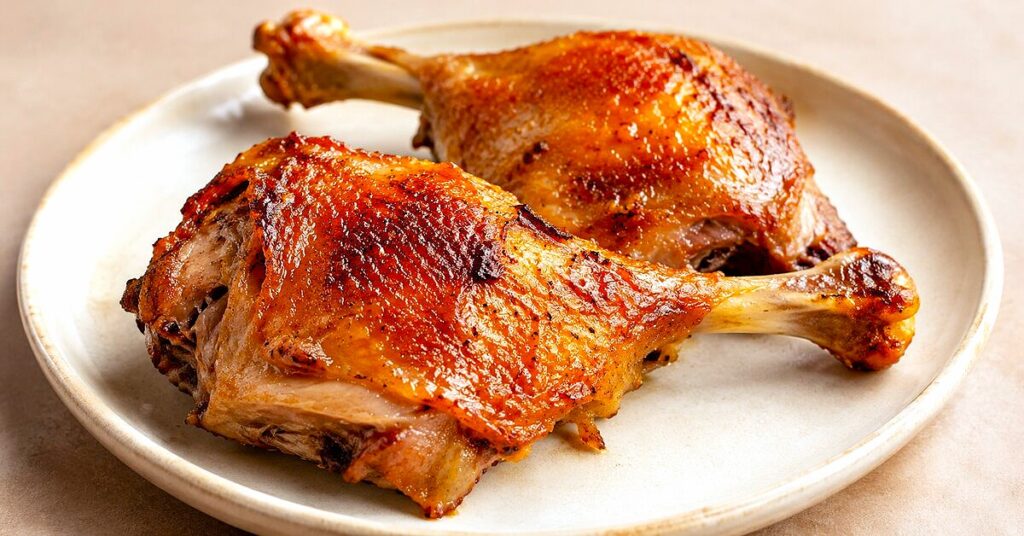
The classic duck confit recipe features salt-cured duck legs slowly cooked in duck fat until tender, then pan-crisped for a rich flavor and beautifully golden skin.
This Duck Confit recipe takes rather simple duck legs and turns them into a very rich dish with really tender meat and a fantastically crispy skin. The trick is a simple salt cure followed by a long slow cook in rendered duck fat. It does take a few hours to do it; the majority of the cooking actually takes place whilst you’re not looking. The recipe goes through the process of making, cooking, and crisping the confit at home for a proper dinner or for a special occasion.
Why You’ll Love This Recipe
Rich flavor: the slow cooking will develop a really deep, savory flavor through the duck.
Tender Texture: Cook the legs very gently in the duck fat indeed, and the meat comes out absolutely tender.
Crispy Skin: a quick finish in a hot pan gives you beautifully golden, crackly skin.
Make ahead friendly: you can prepare the confit in advance and crisp the duck up when you’re ready to serve.
What is a duck confit recipe
Duck confit is a classic French dish in which the legs are seasoned with salt and aromatics and then slowly cooked in duck fat. The slow cooking gives you really tender meat and a very flavorful product, the final pan sear, of course, giving the skin that crisp texture. It was traditionally also a method of preserving meat.
Health Benefits
Duck meat is a good source of high-quality protein, which helps to maintain muscle mass and support normal body functions. It also contains selenium and niacin, which are both important for normal metabolic and cellular functions.
Duck confit is fairly high in calories and fat (particularly if you’re eating the skin and the retained duck fat), so it’s important to have a reasonable portion and go with some vegetables to make a well-balanced meal. The nutrition info is based in part on USDA duck leg composition data. Get Food Facts
How to Serve
Duck confit is rich and savory, so it is absolutely perfect with simple sides.
Roasted Potatoes: Serve with golden potatoes roasted in a little duck fat.
Green Beans: Add some sautéed green beans for a fresh, fairly crisp side.
French lentils: with warm, lightly seasoned lentils.
Fresh green salad: lightly dressed to cut through the richness of the duck.
Roasted vegetables: Carrots or other seasonal veggies will do for a complete meal.
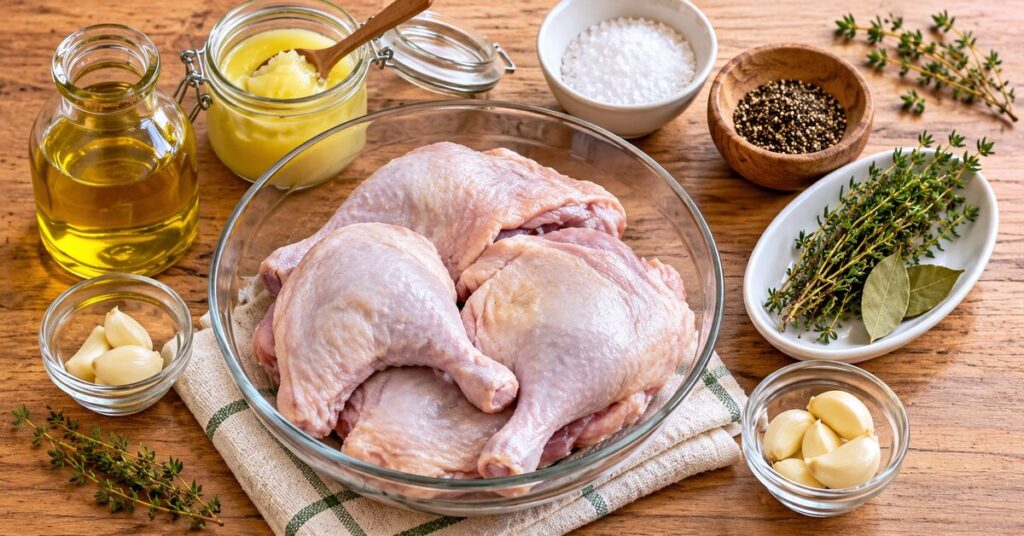
Ingredients for duck confit recipe
Duck legs, skin on 4 large (about 3 lb / 1.4 kg)
Kosher salt 1 tablespoon
Whole black peppercorns, lightly crushed 1 teaspoon
Fresh thyme sprigs: 6
Bay leaves 2
Garlic cloves, lightly crushed 4
Rendered duck fat About 4 cups (960 ml), or enough to submerge the legs
Ingredient Notes
Duck legs: large legs with the skin on, thigh attached to the drumstick.
Kosher salt: Diamond Crystal kosher salt will work fine. If you’re using the more dense Morton kosher salt, then you’ll need about 2 teaspoons.
Duck fat (rendered) gives the confit its distinctive richness and is what allows the legs to cook slowly whilst submerged.
Fresh aromatics: garlic, thyme, bay leaves, and a good grating of black pepper. All of these add a very slight flavor during the curing and cooking process.
The quantity of duck fat you’ll need will vary according to the size and shape of your cooking pot. A pot that fits snugly will obviously require less fat.
Execution
1
Prepare the Duck Legs: Pat the duck legs dry with some paper towels and get rid of any loose bits of fat. Put them in a dish suitable for seasoning.
2
Season and Cure: Coat the legs with kosher salt, some crushed pepper, thyme, bay leaves, and garlic. Cover and put in the fridge for 12-18 hours to allow the seasoning to develop.
3
Prepare the Cooking Fat: Remove the excess curing mixture with clean paper towels and then warm the duck fat gently until it’s completely melted.
4
Slow-Cook the Duck: Arrange the duck legs in a snug ovenproof pot and cover them completely with the melted duck fat. Cook covered at 225°F until the meat is tender and comes away from the bone easily.
5
Crisp the Skin: Take the cooked duck legs out of the fat and let the excess fat drain. Place them skin-side down in a skillet and heat over medium until the skin is well crisped and golden.
6
Serve: Transfer the duck legs to the plates and serve straight away whilst the skin is crisp and the meat is still warm.
Additional tips
Use a Snug Cooking Pot: A smaller Dutch oven will, of course, keep the legs completely covered without needing quite so much duck fat.
Avoid Over-Curing: A 12-18 hour refrigerated cure is ideal. Don’t leave the legs in the salt for too long or they’ll end up far too salty.
Keep the Cooking Temperature Low: Don’t rush to boil the duck fat. A gentle, slow cook is what’s required to get the collagen in the fat to break down and produce a more tender result.
Crisp the Skin Just Before Serving: The skin is best when crisped just prior to serving. If you let it sit in the fat after crisping it, it’ll lose its crispness.
Store Leftovers Safely: Cooked duck must be refrigerated within two hours in shallow, airtight containers at 40°F or below. Use refrigerated leftovers within 3–4 days or freeze for longer storage. Reheat leftovers to 165°F. Traditional preservation in fat must not be regarded as an acceptable alternative to modern refrigeration and safe storage.
Nutrition Facts
Serving Size: 1 Duck Leg (140g cooked edible portion)
Nutrition information is an estimate and may vary depending on duck leg size, preparation method, and the amount of duck fat retained in the finished dish.
Directions
Prep the duck: pat the four duck legs dry with some paper towel and place them in a shallow dish.
Season and refrigerate: rub the legs with kosher salt, some crushed black peppercorns, thyme, bay leaves, and some crushed garlic. Cover and put in the fridge for 12-18 hours.
Prepare the duck fat: Preheat the oven to 225°F (107°C). Remove the excess curing ingredients with clean paper towels and gently melt the rendered duck fat in a saucepan.
Arrange the duck legs in a single layer in a heavy ovenproof Dutch oven. Pour the melted duck fat over them until they are completely covered.
Slow cook until tender: cover the pot and put it in the oven. Cook for about 3 to 3½ hours until a thermometer inserted into the thickest part of each leg registers at least 165°F (74°C) and a knife will glide easily through the meat near the bone. If required, cook longer to achieve tenderness.
Prepare the skin: carefully remove the cooked duck legs from the fat and allow the excess fat to drain off the surface.
Crisp and Serve: Heat a pan over medium. Place the duck leg’s skin side down and cook for about 6-8 minutes until the skin is deep golden and crisp. Turn them very briefly to warm the other side and then serve straight away.
Poultry must reach a minimum internal temperature of 165°F (as per FDA food safety guidelines). Tenderness may require further slow cooking beyond this minimum. Safe Food Handling
Helpful Tips for Duck Confit Recipe
Dry the duck skin: before you cook, pat the legs very thoroughly dry. Getting rid of all that moisture is what will see the skin get crisp and golden when you pan fry it.
Use enough duck: fat (the legs should be fully submerged during the slow cooking) and arrange them in the Dutch oven so that they’re all snug and there’s no need to use any more fat than that.
Cook slowly: keep the oven temp low and steady. Don’t rush the process at all, as slow cooking will work to break down the meat and the connective tissue.
Watch the salt: the overnight cure will add a lot of flavor. Wipe off the excess salt and seasonings prior to cooking; otherwise, your finished duck will be way too salty.
Crisp just before serving: Finish the duck legs skin-side down in a pan immediately before serving for the best texture.
Storage and Reheating
Storage: Once cooled, any leftover duck confit should be refrigerated within 2 hours in an airtight container. The legs can be stored either in the fat that they were cooked in or in a separate airtight container. Keep them in the fridge at 40°F (4°C) or below and use within 3–4 days. For longer storage, freeze the cooked duck legs in a freezer-safe container.
Reheating: For crispy skin, place the refrigerated duck legs skin-side down in a skillet over medium-low heat and cook gently until the skin is crisp and the meat is heated through. You can also reheat them in a 350°F (175°C) oven until they’re hot. Reheat any leftovers to 165°F (74°C). Don’t microwave, as it will make the skin soft.
FAQs
What is duck confit?
Duck confit is traditional French-style duck, with legs seasoned with salt and aromatics and then cooked slowly in the rendered fat of the duck. The meat comes out very tender, and the skin is absolutely crackling when you finish it in a hot pan.
Why are duck legs cooked in duck fat?
Cook the duck legs slowly in duck fat (i.e., submerge them in the fat and cook them gently) to produce very tender, succulent meat. The slow cooking will break down the connective tissue, and the duck will develop a very good flavor.
How do I know when my duck confit is done?
The duck is ready when the thickest part has hit at least 165°F (74°C) and the meat is very tender indeed. A small knife should slide in easily near the bone.
Can I make duck confit in advance?
Yes, duck confit is a brilliant make-ahead dish. You can slow cook the legs in advance, keep them in the fridge safely, and then just crisp the skin in a pan right up until you’re ready to serve.
How do I get crispy duck confit skin?
Pat away any excess moisture and fat from the cooked duck skin. Place the leg’s skin side down in a preheated pan over medium heat and cook until the skin is deep golden and crisp.
Can I freeze duck confit?
Yes, store the fully cooked duck legs in airtight, freezer-safe containers. For the best quality, use them in 2-3 months. Thaw the frozen duck confit in the fridge prior to reheating thoroughly.
Final Thoughts
This Classic Duck Confit with Crispy Skin is a great option if you’re looking to do something special at home. The slow cooking in duck fat produces some absolutely tender meat, and the final pan sear gives the skin that lovely golden crisp.
It does take a while to make, but the actual cooking is very simple, and a lot of it goes on by itself. Serve it with your preferred veg, some roast potatoes, and a good green salad, and you’ve got a really nice, satisfying meal. A great dish to enjoy with the family and friends.