Brazilian cheese bread recipe
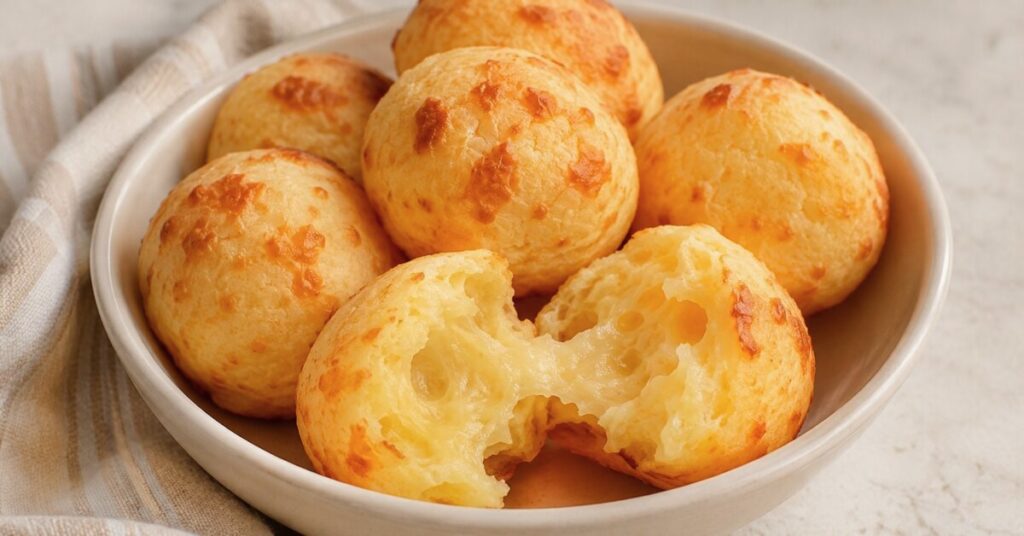
Brazilian cheese bread (pão de queijo) is a delicious snack, made with tapioca and cheese. It’s a very light crisp on the outside and a very soft, chewy center on the inside. This recipe uses a combination of Parmesan and mozzarella for a savory taste and produces little bite-size rolls, which are ideal as a breakfast or snack or as a side.
Why You’ll Love This Recipe
- Naturally gluten-free: made with tapioca starch rather than wheat flour.
- Cheesy and delicious: the Parmesan and mozzarella create a rich, savory flavor.
- Soft and chewy: the tapioca starch is what gives them that texture.
- Versatile: Really, you can have them for breakfast, as a snack in the afternoon, or with your favorite meal.
What is this recipe
Pão de queijo is a Brazilian cheese bread Recipe made up of tapioca, cheese, eggs, and milk. It’s not a normal bread at all and doesn’t require any yeast or proofing.
It has that particular texture down to the tapioca starch, which gives it a quite distinct stretchy, chewy interior and a fairly crisp exterior when baked.
Ingredients
This recipe makes approximately 24 small Brazilian cheese breads.
- 2 cups (250 g) tapioca starch (also labeled tapioca flour)
- ½ cup + 2 tablespoons (150 ml) Whole milk
- ¼ cup (60 ml) Water
- 3 tablespoons (45 ml) Canola oil or neutral vegetable oil
- ½ teaspoon fine salt
- 1 large egg, preferably at room temperature
- ¾ cup (75 g) Freshly grated Parmesan cheese
- ½ cup (50 g) shredded low-moisture mozzarella cheese
Important ingredient notes
Tapioca starch: this is the essential ingredient. Look for a package labelled tapioca starch or tapioca flour. Do not substitute ordinary wheat flour or whole cassava flour.
Parmesan cheese: freshly grated Parmesan gives a savory/salty flavor.
Mozzarella: Use the low-moisture mozzarella rather than the fresh mozzarella packed in water. Gives you that creamy, stretchy texture without the added moisture.
These ingredient choices are in keeping with the ingredient and technique variations seen in the recipes we’ve researched.
How to Make
Prepare the Oven and Baking Sheet: Preheat the oven to 400°F (200°C), put the rack in the center, and line a large rimmed baking sheet with parchment paper.
Measure the tapioca starch and grate the Parmesan before you start. Keep the mozzarella shredded and ready.
Heat the Milk Mixture: Add 150 ml whole milk, 60 ml water, 45 ml canola oil, and ½ tsp fine salt to a medium saucepan.
Place over medium heat and bring the mixture to the boil (stirring occasionally). As soon as it’s boiling, remove the saucepan from the heat. Don’t let the milk boil over.
Combine the Hot Liquid and Tapioca Starch: Place the 250 g tapioca starch in a large heatproof mixing bowl.
Carefully pour the hot milk over the starch and stir vigorously with a wooden spoon until the liquid is all absorbed and there are no dry patches left.
The mix will be quite thick, a bit sticky, and quite uneven-looking. Let it cool for about 10 minutes, stirring occasionally, until it’s warm rather than hot.
Add the Egg and Cheese: Crack the room-temperature egg into the cooled tapioca mixture.
Mix with a wooden spoon or a stand mixer with a paddle attachment until the egg is fully incorporated and the dough is smooth and sticky.
Add the 75g of grated Parmesan and the 50g of shredded mozzarella. Just mix until both cheeses are well incorporated into the dough.
The finished dough should be soft, a bit tacky, and quite thick to work with. A little stickiness is quite normal.
Shape the Cheese Breads: Just lightly oil your hands to stop the dough sticking.
Divide the dough into approximately 24 equal portions (about 1 oz/28 g each). Take each portion and roll it between your palms to form a small round ball about 1¼” in diameter.
Arrange the balls on the prepared baking sheet, leaving about 1½ inches between them so they have room to expand.
If the dough is too sticky to work with, then refrigerate it for 10-15 minutes before proceeding.
Bake Until Golden: Place the baking sheet on the middle oven rack and bake at 400°F (200°C) for approximately 20–25 minutes, rotating the baking sheet halfway through for even browning.
The cheese breads should puff up and develop a lightly golden exterior. The outside should be set, while the inside remains soft, airy, and chewy. Check the center of a larger piece to make sure it is fully baked rather than wet or pasty. See the safe minimum internal temperature guidance.
Cool and Serve: Remove the baking sheet from the oven and let the cheese breads rest for about 5 minutes. Transfer them to a serving plate and enjoy while warm. The exterior will be lightly crisp, while the center will have the characteristic stretchy, chewy texture of Brazilian cheese bread.
Be careful when breaking them open because the melted cheese inside can remain hot.
Additional tips
- Measure the starch carefully: weighing the tapioca starch gives far more consistent results than simply using cups that you’ve loosely packed.
- Choose the right cheese: Parmesan and low-moisture mozzarella offer a good balance of savory and creamy.
- Don’t worry about any slight stickiness: as the tapioca dough is quite different from normal wheat dough. Oiled hands are generally more useful than adding any extra starch.
- Don’t overbake: as this can make the outside too hard and reduce the lovely contrast between the crust and the chewy center.
How to Serve Brazilian Cheese Bread
Brazilian cheese bread is great on its own, but it also goes with a number of things.
- With coffee: Serve warm with freshly brewed coffee or espresso.
- For breakfast: scrambled eggs and fresh fruit.
- With soup: pair with tomato soup, vegetable soup, or another light soup.
- Alongside the meals: fresh salads or pasta dishes.
Storage and Reheating
Refrigerator Storage
Allow the cheese breads to cool before placing them in an airtight container. Refrigerate within 2 hours of baking and store at 40°F (4°C) or below. Use within 3–4 days. according to USDA leftover storage guidelines.
Freezing
For longer storage, arrange the completely cooled cheese breads in a single layer and freeze until firm. Then transfer them to a freezer bag or an airtight container.
For best quality use within about 2 months.
Reheating
- Oven: Reheat at 325°F (163°C) for about 5–8 minutes, or until warmed through.
- Toaster oven: heat until warm and the outside is lightly crisp.
- Microwave: heat for a very brief time (approx. 10-15 seconds per piece) for a softer result.
For food safety purposes, the USDA guidance is to reheat your leftovers to 165°F (74°C). following FoodSafety.gov safe temperature recommendations.
FAQs for the Brazilian cheese bread recipe
Is Brazilian cheese bread gluten-free?
Yes, traditional pão de queijo uses tapioca starch rather than wheat flour, so it is naturally gluten-free. Just be sure to check the ingredient packaging and cross-contact info if you’re making it for someone with celiac disease.
Can I use tapioca flour in place of tapioca starch?
Yes. In U.S. grocery stores, tapioca flour and tapioca starch are used interchangeably to describe the same thing. Just make sure it’s pure tapioca starch rather than whole cassava flour.
Why is my Brazilian cheese bread dough so sticky?
Sticky dough is perfectly normal, as the hydrated tapioca starch will form a very thick, elastic mass. If it does get a bit difficult to work with then just lightly oil your hands or briefly chill the dough.
Can I make the Brazilian cheese bread in advance?
Yes. Form the dough into individual balls, freeze them on a baking sheet, and then transfer them to a freezer bag once they’re firm. Bake from frozen (allowing a few extra minutes and making sure they’re well cooked).
Can I use different types of cheese?
Yes, some versions do use farmer’s cheese, Pecorino, or other such cheeses. Just ensure you’re using cheeses with the right moisture content so the dough maintains its structure.
Why is Brazilian cheese bread so chewy?
Tapioca starch is what gives it that characteristic chew. When it’s hydrated and baked, it produces an elastic interior, which is very different from traditional wheat bread.
Health Benefits for Brazilian Cheese Bread Recipe
Tapioca starch provides most of the carbohydrates, while the eggs and cheeses contribute protein. Parmesan and mozzarella also provide calcium. These cheese breads are relatively low in dietary fiber and contain saturated fat and sodium, so enjoy them as part of a varied and balanced diet.
Nutrition Facts
Serving Size: 3 small breads (approximately 1/8 of the recipe)
Servings: 8
| Nutrient | Amount Per Serving |
|---|---|
| Calories | 236 kcal |
| Total Fat | 10.2 g |
| Saturated Fat | 3.1 g |
| Cholesterol | 37 mg |
| Sodium | 375 mg |
| Total Carbohydrates | 30.3 g |
| Dietary Fiber | 0.3 g |
| Total Sugars | 1.1 g |
| Added Sugars | 0 g |
| Protein | 5.6 g |
Nutrition disclaimer: Nutritional values are estimates calculated from the ingredient quantities and serving size. Actual values may vary depending on cheese brands, ingredient measurements, and preparation methods. Total sugars are approximate because the selected tapioca-starch reference does not provide a separate sugar measurement.
Final Thoughts
The Brazilian cheese bread recipe is a tasty homemade snack. It’s a chewy bread with a distinctly cheesy flavor. It’s made from very simple ingredients, and the base is naturally gluten-free (tapioca). A very good alternative to a normal roll.
Serve these little cheese breads warm for breakfast, as a snack, or with your favorite meal. They’re absolutely delicious straight off the oven when the outside is just a little crisp and the inside is soft and springy.